
Mouse Secondary Antibodies

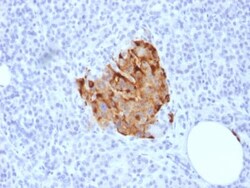
Biotium Chromogranin A / CHGA (Neuroendocrine Marker) (CHGA/1773R), CF568 conjugate, 0.1mg/mL
Chromogranin A is present in neuroendocrine cells throughout the body, including the neuroendocrine cells of the large and small intestine, adrenal medulla and pancreatic islets. It is an excellent marker for carcinoid tumors, pheochromocytomas, paragangliomas, and other neuroendocrine tumors. Co-expression of chromogranin A and neuron specific enolase (NSE) is common in neuroendocrine neoplasms. Reportedly, co-expression of certain keratins and chromogranin indicates neuroendocrine lineage. The presence of strong anti-chromogranin staining and absence of anti-keratin staining should raise the possibility of paraganglioma. The co-expression of chromogranin and NSE is typical of neuroendocrine neoplasms. Most pituitary adenomas and prolactinomas readily express chromogranin.Primary antibodies are available purified, or with a selection of fluorescent CF Dyes and other labels. CF Dyes offer exceptional brightness and photostability. Note: Conjugates of blue fluorescent dyes

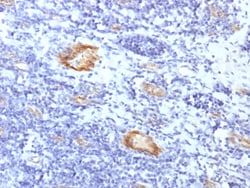
Biotium von Willebrand Factor / Factor VIII Related-Ag (Endothelial Marker) (VWF/1859R), CF568 conjugate, 0.1mg/mL
von Willebrand Factor (vWF) is a multimeric glycoprotein that is found in endothelial cells, plasma and platelets. It acts as a carrier protein for Factor VIII and promotes platelet adhesion and aggregation. vWF undergoes a variety of posttranslational modifications that influence the affinity and availability for Factor VIII, including cleavage of the propeptide and formation of N-terminal disulfide bonds. This antibody helps to establish the endothelial nature of some lesions of disputed histogenesis, e.g. Kaposi's sarcoma and cardiac myxoma. It is widely used for differentiating vascular lesions from those of other tissue differentiation within a panel of other vascular markers although not all tumors of endothelial differentiation contain this antigen.Primary antibodies are available purified, or with a selection of fluorescent CF Dyes and other labels. CF Dyes offer exceptional brightness and photostability. Note: Conjugates of blue fluorescent dyes like CF405S and C
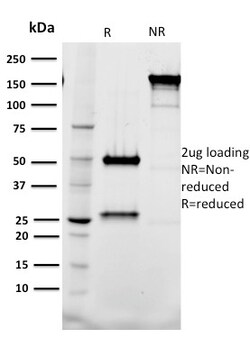
Biotium Tal1(BTL73), 1mg/mL
Activation of TAL1 characterizes up to 60% of cases of human T cell acute lymphoblastic leukemia, making it the most frequent gain-of-function mutation observed in this disorder. TAL1 (also designated SCL) is a serine phosphoprotein and basic helix-loop-helix transcription factor known to regulate embryonic hematopoiesis. This transcription factor binds as a heterodimer with E2A and HEB/HTF4 to a nucleotide sequence motif termed the E-box. In addition, leukemogenesis is accelerated dramatically by transgenic co-expression of TAL1 and the catalytic subunit of casein kinase IIHLH transcription factors. Primary antibodies are available purified, or with a selection of fluorescent CF Dyes and other labels. CF Dyes offer exceptional brightness and photostability. Note: Conjugates of blue fluorescent dyes like CF405S and CF405M are not recommended for detecting low abundance targets, because blue dyes have lower fluorescence and can give higher non-specific background than oth
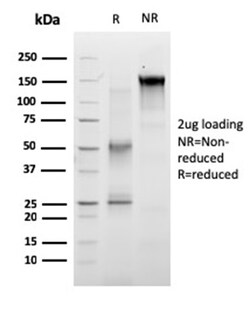
Biotium RET Proto-oncogene(RET/2663), Biotin conjugate, 0.1mg/mL
The Ret proto-oncogene is structurally related to the growing family of tyrosine kinase transmembrane receptors and is involved in GDNF signaling. RET expression is reported in several regions of the central nervous system; in the developing cranial nerve ganglia and a subset of cells within dorsal root ganglia, in motor neurons in the spinal cord and hindbrain, in neuro-retina and the growing tips of the renal collecting ducts in developing kidney. Alterations in RETgene are associated with diseases including papillary thyroid carcinoma, multiple endocrine neoplasia (type 2A and 2B), familial medullary thyroid carcinoma, and a congenital developmental disorder known as Hirschsprung's disease. Primary antibodies are available purified, or with a selection of fluorescent CF Dyes and other labels. CF Dyes offer exceptional brightness and photostability. Note: Conjugates of blue fluorescent dyes like CF405S and CF405M are not recommended for detecting low abundance targets,
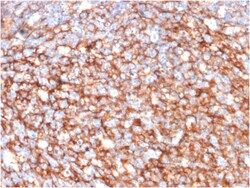
Biotium CD73 (Immuno-Oncology Target)(NT5E/2646), Biotin conjugate, 0.1mg/mL
CD73 is a membrane-bound extracellular enzyme overexpressed in several cancer types. Its expression has been linked to poor prognosis in melanoma, colorectal, gastric, triple negative breast cancer, and to a pro-metastatic phenotype in prostate cancer. Together with CD39, it plays a major role in promoting immunosuppression through the pathway degrading adenosine triphosphate (ATP) into adenosine. Within the tumor microenvironment, ATP promotes immune cell-mediated killing of cancer cells. In contrast, adenosine accumulation causes immune suppression, dysregulation of immune cell infiltrates and stimulates angiogenesis resulting in tumor spreading. CD73 is active on the last step of the degradation pathway, where it is the enzyme that actually degrades AMP into adenosine. CD73-blockade promotes anti-tumor immunity by reducing adenosine accumulation. Accordingly, anti-CD73 mAbs stimulate anti-tumor immunity and reduce tumor metastasis in Mouse tumor models, and could enhance t
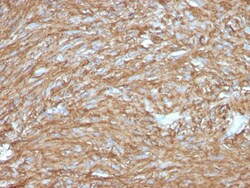
Biotium DOG-1 / TMEM16A (Gastrointestinal Stromal Tumor Marker)(DG1/2831R), CF568 conjugate, 0.1mg/mL
Expression of DOG-1 protein is elevated in the gastrointestinal stromal tumors (GIST's), c-kit signaling-driven mesenchymal tumors of the GI tract. DOG-1 is rarely expressed in other soft tissue tumors, which, due to appearance, may be difficult to diagnose. Immunoreactivity for DOG-1 has been reported in 97. 8 percent of scorable GIST's, including all c-kit negative GIST's. Overexpression of DOG-1 has been suggested to aid in the identification of GISTs, including Platelet-Derived Growth Factor Receptor Alpha mutants that fail to express c-kit antigen. The overall sensitivity of DOG1 and c-kit in GIST's is nearly identical: 94. 4% vs. 94. 7%. Primary antibodies are available purified, or with a selection of fluorescent CF Dyes and other labels. CF Dyes offer exceptional brightness and photostability. Note: Conjugates of blue fluorescent dyes like CF405S and CF405M are not recommended for detecting low abundance targets, because blue dyes have lower fluorescence and can

Biotium Luteinizing Hormone / Choriogonadotropin Receptor (LHCGR) (LHCGR/1415), 0.2mg/mL
This antibody recognizes a protein of 78-85 kDa, which is identified as luteinizing hormone/choriogonadotropin receptor. Luteinizing hormone plays a role in spermatogenesis and ovulation by stimulating the testes and ovaries to produce steroids. Choriogonadotropin production in the placenta maintains estrogen and progesterone levels during the first trimester of pregnancy. Ovaries and testes abundantly express luteinizing hormone/choriogonadotropin receptor (LHCGR) as a seven transmembrane, G protein-coupled receptor glycoprotein. LHCGR influences the protective effect of pregnancy and Gonadotropin against breast cancer. The expression of LHCGR on breast carcinoma correlates in part to the degree of tumor differentiation. LHCGR -positive breast tumors occur more frequently in tumors with greater cell differentiation in premenopausal women.Primary antibodies are available purified, or with a selection of fluorescent CF Dyes and other labels. CF Dyes offer exceptional brigh
Biotium Spectrin beta III (SPTBN2) (SPTBN2/1583), Biotin conjugate, 0.1mg/mL
Spectrin is an actin binding protein that is a major component of the plasma membrane skeleton. Spectrins function as membrane organizers and stabilizers by forming dimers, tetramers and higher polymers. Vertebrate spectrins have two alpha-subunits (alpha-I/alpha-II), four beta-subunits (beta-I-beta-IV) and a beta-H subunit creating diversity and specialization of function. Spectrin alpha and spectrin beta are present in erythrocytes, whereas spectrin alpha II (also designated fodrin alpha) and spectrin beta I (also designated fodrin beta) are present in other somatic cells. The spectrin tetramers in erythrocytes act as barriers to lateral diffusion, but spectrin dimers seem to lack this function. Spectrin beta III is highly homologous to both spectrin beta I and spectrin beta II. Spectrin beta III is highly expressed in brain, kidney, pancreas and liver, and at lower levels in lung and placenta. Spectrin beta 3 is primarily expressed in nervous tissues with highest expressio
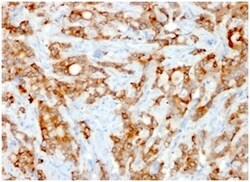
Biotium Beta-2 Microglobulin (Renal Failure &Tumor Marker) (rB2M/961), Biotin conjugate, 0.1mg/mL
Beta-2 microglobulin is a component of the class I major histocompatibility complex (MHC I) where it functions in antigen processing and presentation. Involved in the presentation of peptide antigens to the immune system. Human Beta-2 microglobulin is expressed on many types of cells including lymphocytes, thymocytes, monocytes, granulocytes, platelets, endothelial cells, and epithelial cells. It is absent on erythrocytes. This MAb is specific to human Beta-2 microglobulin and does not react with non-human primate cells. This antibody reacts with all cell types excluding erythrocytes. The detection of Beta-2 microglobulin in body fluids has been used as a tumor marker and for monitoring patients with HIV infection.Primary antibodies are available purified, or with a selection of fluorescent CF Dyes and other labels. CF Dyes offer exceptional brightness and photostability. Note: Conjugates of blue fluorescent dyes like CF405S and CF405M are not recommended for detecting l
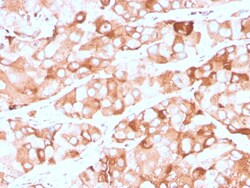
Biotium Prolactin Receptor (hPRL Receptor)(rPRLR/742), CF647 conjugate, 0.1mg/mL
Recognizes a protein of 70 kDa, identified as prolactin receptor. Prolactin is a pituitary hormone involved in the stimulation of milk production, salt and water regulation, growth, development and reproduction. The initial step in its action is the binding to a specific membrane receptor (prolactin receptor), which belongs to the superfamily of class 1 cytokine receptors. The function of the prolactin receptor is mediated, at least in part, by two families of signaling molecules: Janus kinases and signal transducers and activators of transcription. Primary antibodies are available purified, or with a selection of fluorescent CF Dyes and other labels. CF Dyes offer exceptional brightness and photostability. Note: Conjugates of blue fluorescent dyes like CF405S and CF405M are not recommended for detecting low abundance targets, because blue dyes have lower fluorescence and can give higher non-specific background than other dye colors.
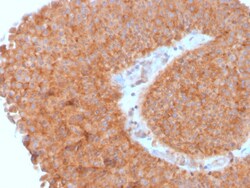
Biotium PAI-RBP1 / SERBP1 / SERPINE1(SERBP1/3495), Biotin conjugate, 0.1mg/mL
PAI-RBP1 (plasminogen activator inhibitor 1 RNA-binding protein), also known as SERBP1 (SERPINE1 mRNA-binding protein 1), CGI-55, CHD3IP (chromodomain helicase DNA binding protein 3 interacting protein), HABP4L or PAI-RBP1, is a membrane-associated protein that localizes to the nucleus, the perinuclear region of the cytoplasm and the plasma membrane. PAI-RBP1 is believed to play a role in the regulation of mRNA stability, as it specifically binds to the CRS (cyclic nucleotide-responsive sequence) motif of the PAI-1 mRNA and acts to stabilize the mRNA and regulate its expression. In addition, PAI-RBP1 interacts with Mi2- and may be involved in chromatin remodeling. PAI-RBP1 also interacts with PGRMC1 and participates in the transduction of Progesterone's antiapoptotic action in ovarian cell types. The gene encoding PAI-RBP1 is overexpressed in ovarian cancer, suggesting a possible role for PAI-RBP1 in tumorigenesis and tumor metastasis. Primary antibodies are available purifie
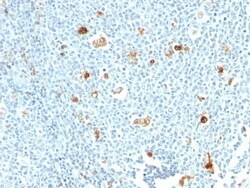
Biotium Calprotectin (MRP14)(S100A9)(CPT/1028), 0.2mg/mL
Recognizes the L1 or Calprotectin molecule, an intra-cytoplasmic antigen comprising of a 12 kDa alpha chain and a 14 kDa beta chain. Calprotectin comprises 60% of the cytoplasmic protein fraction of circulating polymorphonuclear granulocytes and is also found in monocytes, macrophages and ileal tissue eosinophils. Peripheral blood monocytes carry the antigen extra- and intracellularly, neutrophils only intracellularly. Calprotectin has antibacterial, antifungal, immunomodulating and antiproliferative effects. Besides this it is a potent chemotactic factor for neutrophils. Plasma concentrations are elevated in diseases associated with increased neutrophil activity, like inflammatory bowel disease. Granulocytes terminate their existence after transmigration through the intestinal wall. Therefore calprotectin is also detectable in feces. Elevated levels of calprotectin have been observed in body fluids such as plasma, saliva, gingival crevicular fluid, stools, and synovial fluid

Biotium Catenin, alpha-1 (CTNNA1) (1G5), CF488A conjugate, 0.1mg/mL
Alpha-E-catenin (also known as Alpha-1 catenin) is part of the catenin family, a large family of Ca2 -dependent, homotypic cell-cell adhesion molecules that play important roles in development, epithelial cell polarity and tumor progression. Alpha-E-catenin is a key regulator of actin dynamics in cell-cell adhesion. During cell-cell adhesion, alpha-E-catenin forms a heterodimer with beta-catenin and links the cadherins to actin associated with the cytoskeleton. Alpha-E-catenin also regulates the beta-catenin signaling in various cells. It displays the tumor suppressor activity and is found to be down regulated in some forms of breast cancer.Primary antibodies are available purified, or with a selection of fluorescent CF Dyes and other labels. CF Dyes offer exceptional brightness and photostability. Note: Conjugates of blue fluorescent dyes like CF405S and CF405M are not recommended for detecting low abundance targets, because blue dyes have lower fluorescence and can g

Biotium Desmoglein-2 (DSG2) (6D8), CF740 conjugate, 0.1mg/mL
This antibody recognizes a protein of 165 kDa, identified as Desmoglein-2 (DSG2). This monoclonal antibody This antibody recognizes the extracellular domain of human desmoglein-2. Desmoglein-2 is a member of the desmosomal cadherin family. Desmosomes are intercellular adhering junctions that represent cell surface attachment sites for intermediate filament. Desmocollins and desmogleins are the main desmosomal transmembrane proteins. Desmogleins consist of Dsg1, Dsg2, Dsg3, and Dsg4 isoforms. Within the desmosome, the extracellular domain of desmoglein is essential for calcium dependent heterophilic binding to the desmocollins, whereas the intracellular domain is essential for binding to the desmosomal plaque protein, plakoglobin. Human Desmoglein-2 is a type I transmembrane glycoprotein of 1117 amino acid (aa) residues with a 23 aa signal peptide and a 25 aa propeptide. It differs from other classic cadherins by having four instead of five cadherin repeat domains in its extra